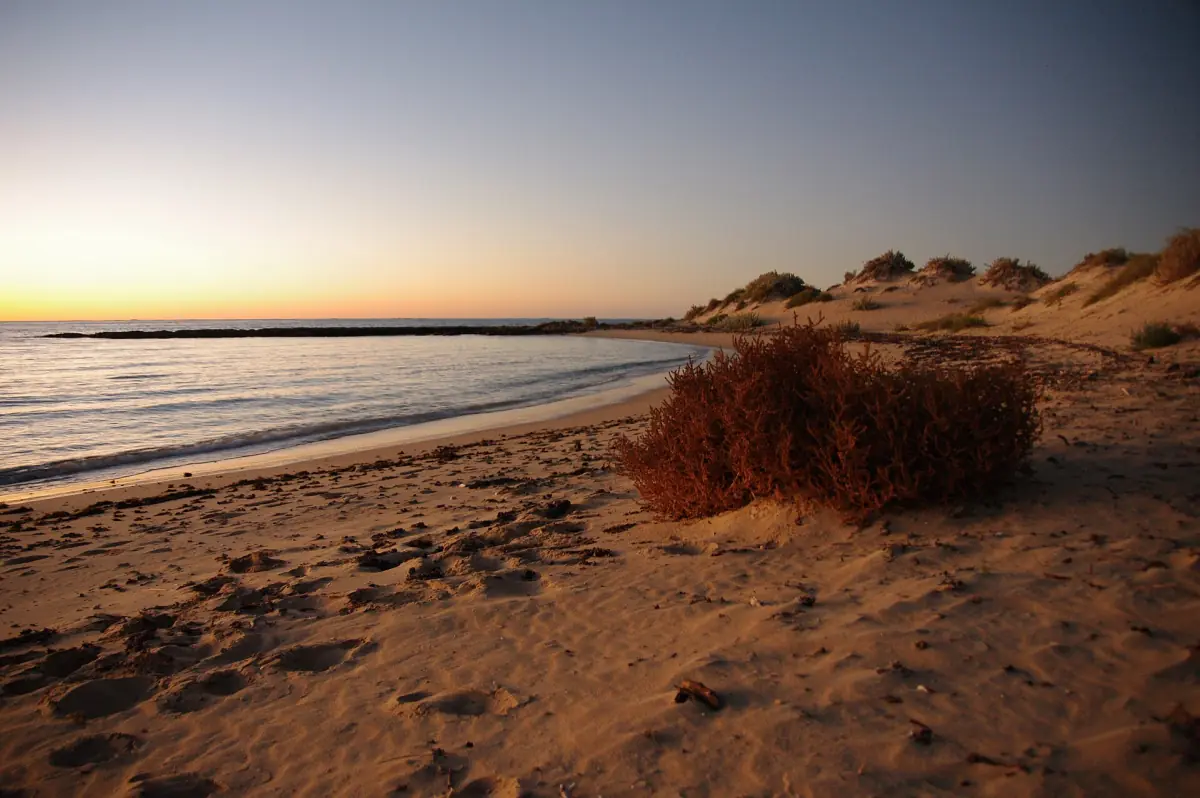
Exmouth weather in short
The summer months are very hot, and the coolest months are June and July. September to November is the driest stretch. The numbers below are long-term averages from the Bureau of Meteorology station at Learmonth Airport. They show what a month is usually like, not what the weather will be on your dates.
There is no single best time for every kind of trip. Whale sharks, humpback whales, mantas and turtles all have different windows, and walking is a cool-season activity. Pick the animal or activity first, then check the matching months.
Average temperature and rain by month
Learmonth Airport, all years of record, Bureau of Meteorology table of 15 October 2026. Temperatures start in 1975 and rain in 1945.
| Month | Average max °C | Average min °C | Average rain mm |
|---|---|---|---|
| January | 38.1 | 23.1 | 29.2 |
| February | 37.6 | 24.1 | 38.1 |
| March | 36.6 | 23.1 | 42.5 |
| April | 33.4 | 20.4 | 19.1 |
| May | 28.7 | 16.0 | 40.8 |
| June | 24.9 | 13.2 | 42.9 |
| July | 24.5 | 11.4 | 20.4 |
| August | 26.6 | 12.3 | 11.8 |
| September | 29.7 | 13.9 | 2.4 |
| October | 33.0 | 16.5 | 1.4 |
| November | 34.6 | 18.5 | 1.8 |
| December | 37.1 | 21.0 | 5.6 |
These are airport figures, not readings at each beach, and they are not a forecast. The same table shows a 3 p.m. average wind of 23.6 km/h in October and 15.9 km/h in June, but that wind series runs only from 1975 to 2010, so treat it as history.
Tours for every season
Whale shark, humpback, reef and canyon trips from Exmouth, with live prices and availability.
Best time to visit Exmouth
Match the month to what you want to do.
| You want | Season window | Note |
|---|---|---|
| Whale sharks | March to July, or March to August | The park authority gives both ranges on different pages. No sighting is guaranteed. |
| Humpback whales, watching | June to November, or August to December | Two park authority pages differ. |
| Humpback whales, swim tours | August to mid October, or August to October | Windows advertised by two operators. |
| Manta rays off Exmouth | Most animals from May to November | Not a year-round swim tour from Exmouth. |
| Nesting turtles | November to March | Hatching comes about 60 days after egg laying. |
| Walking in the gorges | Cooler months and cooler times of day | The park overview advises walks only from April to September. |
The whale shark and humpback windows are seasons for presence and for advertised tours, not guarantees. Details are on the animal guides.
Whale sharks
Read the swim rules, group sizes and prices before you choose a month.
Whale shark guide →Humpback whales
Swimming with humpbacks is possible only on a licensed tour. Private whale watching is possible if you keep at least 100 m from the whale.
Humpback guide →Turtles
The Ningaloo Centre names loggerhead and green turtles and the beaches south of Vlamingh Head as important nesting sites. The park authority names February and March as a time to see hatchlings, but hatching dates cannot be fixed to a calendar day.
Heat, storms and stingers
Three seasonal risks to plan around.
Heat on walks
From November to March the park authority warns of temperatures above 45 °C, very little shade and no water on the trails. Carry at least 4 litres per person, choose cooler times of day and stay back from cliff edges. Walks in Cape Range are best done early in the morning or late in the afternoon.
Cyclone season
The official season runs from 1 November to 30 April, and the north-west coast between Broome and Exmouth is named as especially exposed. Cyclones are rare outside the season but possible. Cyclone Narelle hit in 2026, so confirm your accommodation before you travel.
Accommodation →Stingers
Dangerous jellyfish can occur, especially from November to April. Do not assume the water is jellyfish-free at any time of year.
Bushfire and travel advice
The UK government advice notes increased bushfire risk in Australia from October to February. The German Foreign Office names heat, fire and smoke risks mainly for the east, south-east, north and interior of Australia.
Getting there →What changed for the reef
Two events to know about.
Coral bleaching 2024 and 2025
The Australian Institute of Marine Science documented serious damage in the marine heatwave of 2024 and 2025. In May 2025 some surveyed Ningaloo sites, especially Tantabiddi and Jurabi, were in the 31 to 60 percent bleaching and mortality category. Bleaching is not the same as death, and a fully healthy or fully recovered reef is not documented.
Cyclone Narelle 2026
In April 2026 the institute described a model with waves up to 11 m near the northern reef and likely severe damage. This is a model assessment, not a survey of the whole reef underwater.
Plan the rest of your trip
Pages to read next.
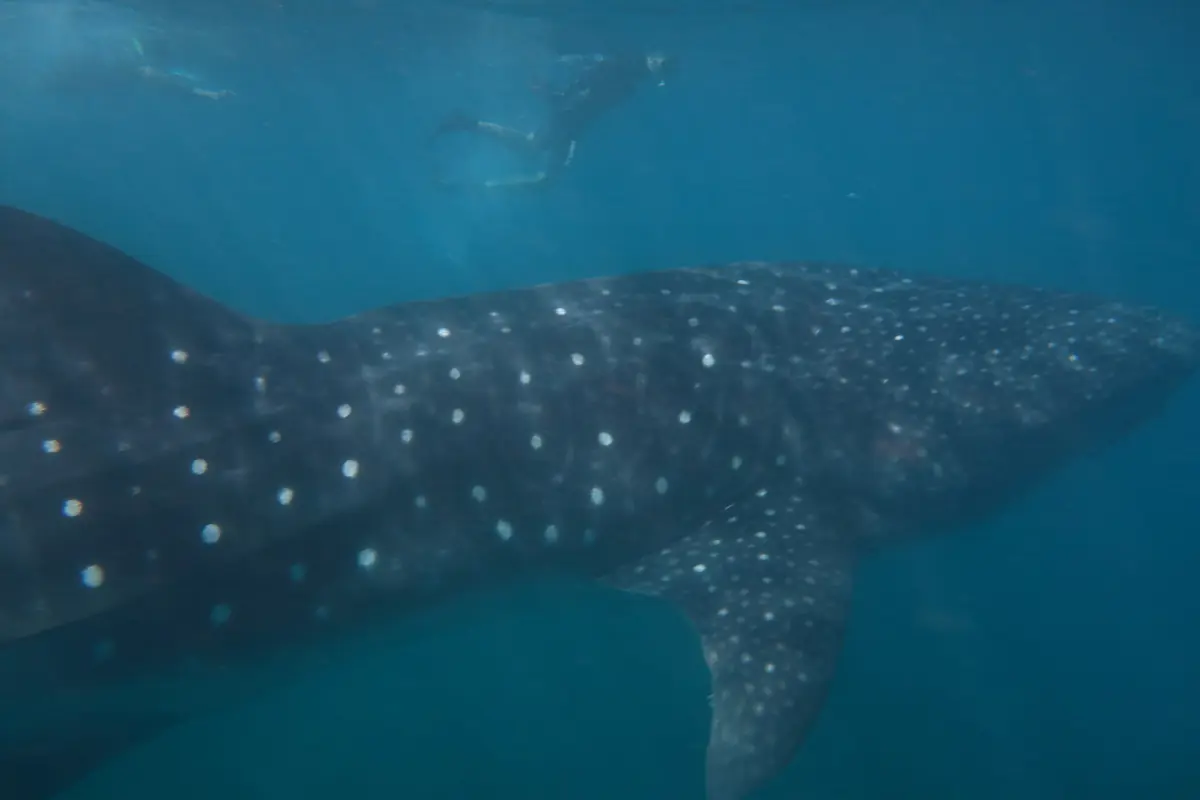
Whale sharks
Season, licence system, rules and prices.
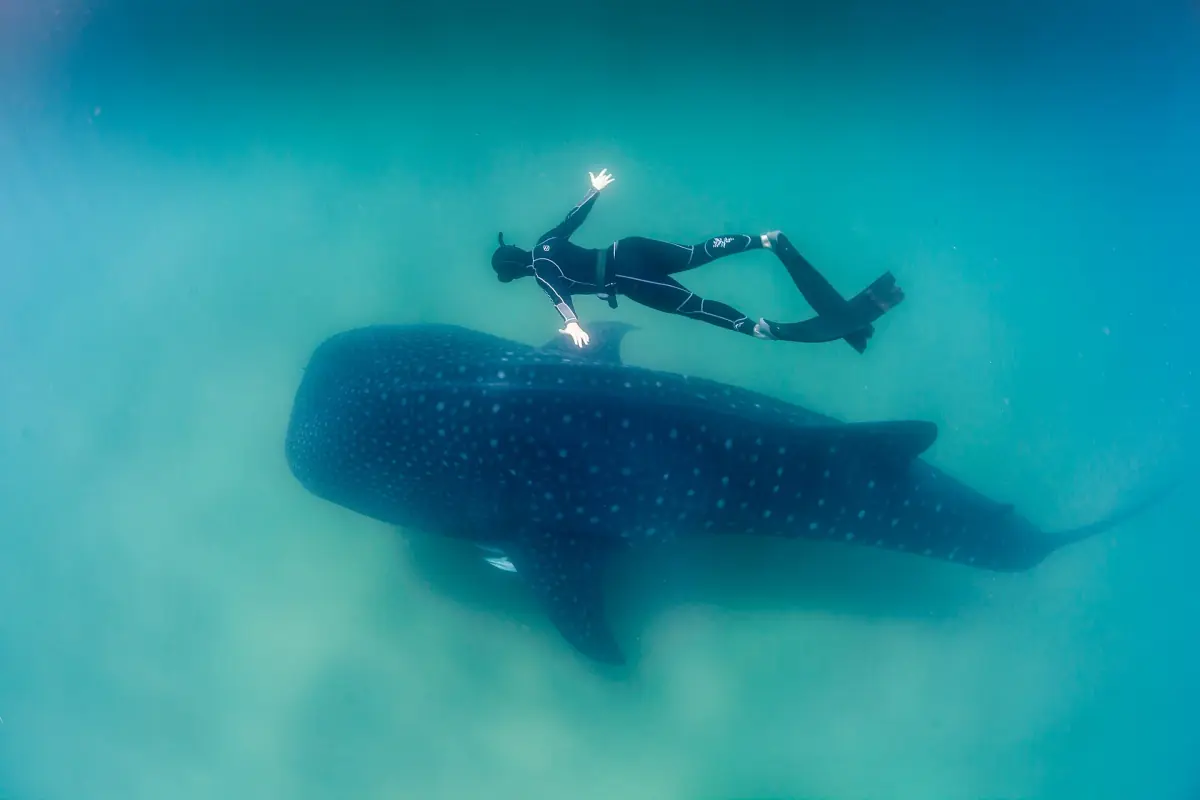
Humpback whales
Licensed swimming and boat watching.
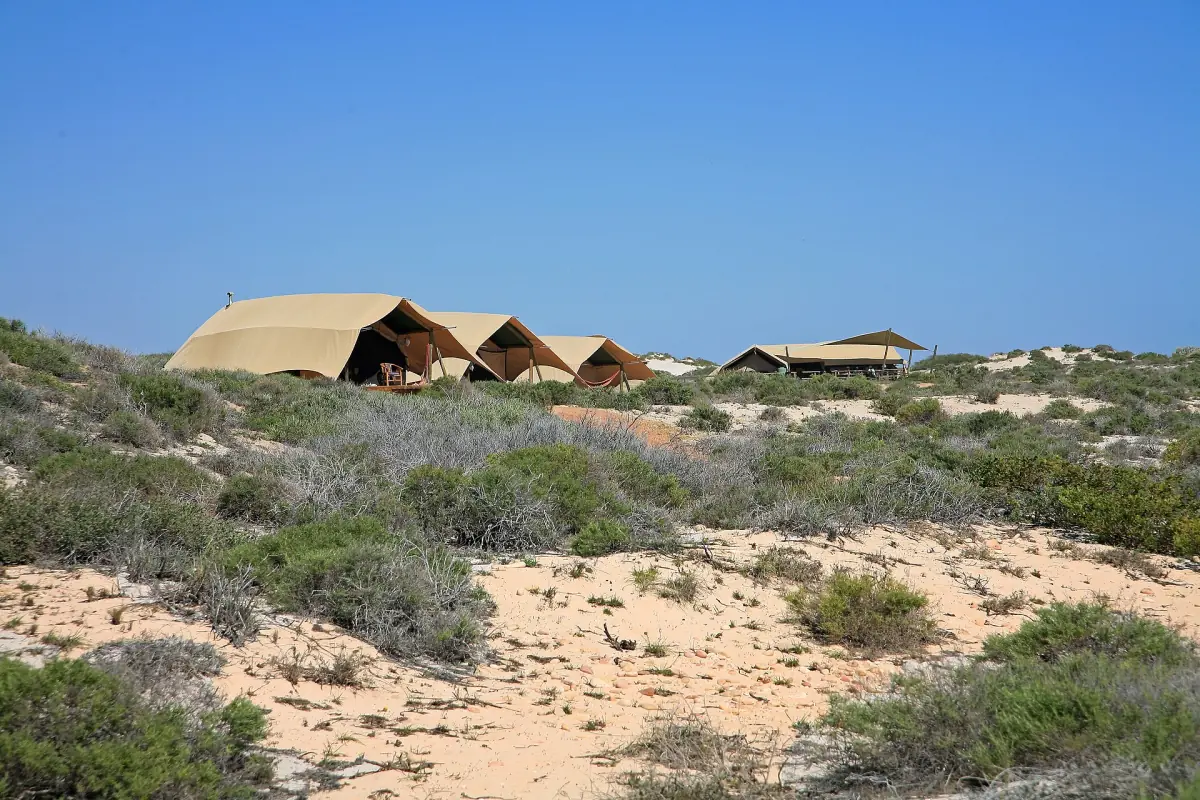
Camping
The monthly booking release and park rules.
For the southern end of the reef, see Coral Bay, which has its own weather page.
Exmouth weather: frequently asked questions
What is the hottest month in Exmouth?
January has the highest average maximum at 38.1 °C, followed by February at 37.6 °C. February also has the highest average minimum at 24.1 °C.
What is the coolest month?
July. The average maximum is 24.5 °C and the average minimum is 11.4 °C.
Which months are the driest?
September, October and November, with 2.4, 1.4 and 1.8 mm on average. June has the most rain on average at 42.9 mm.
When is cyclone season?
Officially from 1 November to 30 April. Cyclones are rare outside this period but still possible.
When should I go to see whale sharks?
The park authority gives March to July on one page and March to August on another. Operators advertise their own windows. None of these is a guarantee of a sighting.